Sunday, September 27, 2015

Protein Sensitive

As you may know, I've been experiencing some dryness and breakage. I wasn't quite sure what was going on, feeling defeated and frankly fed up. After reviewing my blog entries (I was giving it a bit of a facelift) I began to realize that I may be using too much protein. I haven't been using strong proteins, but I believe any amount of protein may be too much. In other words, I am protein sensitive. When I was relaxed this was harder for me to notice, be cause I have very fine hair and didn't couldn't really determine if the breakage I experienced back then was a result of the relaxer. Now, it's a lot easier to figure out.

To confirm my suspicions I avoided all protein based products for a few weeks. That meant shampoo, conditioner, leave in and moisturizer. Oh yes, I was using protein based shampoo. Smh. I guess I thought my curly hair could handle it. To boost my moisture level, I applied my old tested and true Banana/Coconut Milk Masque to see if I could revive my very dry tresses. It helped and I noticed the difference almost immediately. My hair felt soft and moisturized and I was able to maintain a decent amount of moisture until my next wash day. In the past, no matter how much product I put on my hair, it continued to feel quite dry. So it was confirmed. My fine locs can not handle too much protein.

I didn't want to swing too far into the opposite direction, so I completed a mild protein treatment today utilizing my Avocado Masque  (modified), which I think will keep me on the right path to healthy balanced hair. To recap, I blended the avocado and oils well in a blender until smooth then add the egg and the honey. In addition to modifying the recipe a bit, I applied freshly washed hair, from root to tip, applied 2 plastic caps and let it sit for 3 hours. My goal was only 1 hour, but I was a little distracted. I rinsed it out and lightly finger detangles and then applied AO Honeysuckle Rose and allowed that to sit while I cleansed my body. I then finger detangled again while doing my final rinse. Finally I applied homemade moisture balance spritz, sealed with my shea butter mix and air dried. That's it. Here is the modified recipe I used:

1 small hass avocado
1 egg
1 tsp each of EVCO, EVOO, JBCO
1 tsp honey

Overall, I am very pleased with the results. My hair feel soft, yet strong. I'm going to stick with moisturizing products and plan to do a protein treatment in 4-6 weeks. I will have to wait to see what my hair needs. As much as I would like to use certain products that seem to be loaded with protein, I simply can't. In this rare occassion, my hair calls the shots.
                                 

Saturday, September 19, 2015

Food For Thought

I've struggled with hair loss issues for a variety of reasons. Chemical damage, poor handling, dryness have all led to breakage, breakage, breakage. I've also have a small bald patch at the back of my head and a sparse hairline due to improper extension application. If you also suffer from hair loss, you may wonder about ways to help improve your condition. Reading a few blogs and site have led me to the conclusion that food is very important part in the promotion of healthy hair growth. While hair is quite capable of growing regardless of what you do, I believe the health and quality of your hair (strong, shiny, maximum rate vs sluggish and dry) will be influenced by the the types of food you eat. It is also the healthiest and "easiest" option for improving the look of your hair.

What are the top foods that promote hair growth?
When choosing food for hair growth, remember that hair is made of protein; therefore protein-rich foods should make up a high percentage of your diet. The second most important hair nutrient is iron. Each key nutrient below lists the foods that promote hair growth (Where possible always buy fresh organic/free-range dairy and produce):

Vegan/Vegetarians:
  • Protein: eggs, bean, cottage cheese, yogurt, tofu.
  • Iron: whole grain cereals, dark green leafy vegetables, eggs, dates, raisins.
  • B Vitamins: eggs.
  • Essential Fatty Acids: walnuts, canola oil, soy.
  • Vitamin E: avocados, nuts, seeds, olive oil.
  • Sulfur: nuts, legumes, garlic, onions.
  • High Quality Multivitamin 
Non-vegetarians:
  • Protein: liver, brewer's yeast, fish, eggs, beans, cottage cheese, yogurt, tofu
  • Iron: liver, whole grain cereals, dark green leafy vegetables, eggs, dates, raisins.
  • B Vitamins: eggs, meat, poultry.
  • Essential Fatty Acids: walnuts, canola oil, fish, soy.
  • Vitamin E: avocados, nuts, seeds, olive oil.
  • Sulfur: meats, fish, nuts, legumes, garlic, onions.

Green tea may help correct these problematic hormone imbalances; a low-fat diet may also be beneficial. (source)

As you make changes to your diet to help improve hair growth be aware that there are some culprits in our diets that can actually be detrimental to our hair:
  • Caffeine
  • Sugar
  • Fat
  • Carbonated drinks
For further information on hair loss and healther ways to promote hair growth please visit the following link http://www.quickcare.org/skin/foods-that-promote-hair-growth.html
                                 

Sunday, March 22, 2015

Homemade Banana/Coconut Milk Masque


Given my recent battle with breakage I was reviewing my hits and miss list and it just occurred to me that I didn't post my Homemade Banana/Coconut Milk Masque recipe. Natural recipes , such as my avocado masque recipe are not something I use anymore for the following reasons, but I found this banana mask made my hair extremely soft and moisturized. Since I will not be using it for the purpose of infusing protein in my hair, I will be adding it to my regimen to bump up the moisture level of my hair. When you read my results, you'll understand why.


1 banana
1/4 C Aloe Vera juice (add more if consistency is too thick)
1/4 C Coconut Milk
1 tsp each of Avocado oil and Castor oil


Blend all the ingredients until smooth. The masque was thick, smooth and silky and smelled like a banana smoothie. If you changed the oils to flaxseed you could definitely drink it--but I digress. When I use it, I will apply the masque to freshly washed, towel dry hair, from root to tip, covered with a plastic cap and let it sit in my hair for 2 hours---without heat. If you apply heat, you'll regret it. Trust me. After I rinsed I out, my hair felt incredibly soft, it detangled beautifully, felt silky and there was absolutely no hair loss. The softness even lasted while styling, which I never feel with my other conditioners. When you compare the price for commercial conditioners (less than $1.50 per batch vs $3.50-$4 per use) and the fact that this is 100%, it's hands down the best alternative imo.


If you give it a try, let me know how you like it.
                                 

Breakage!!!!!!!!

So I am at the stage where I am frustrated with my hair. Again. Frustrated because I seem to be sitting at the same length for the last 5-6 months. This mean I am experiencing breakage. It's harder for me to really see now that I am natural because my hair is so tightly coiled, when I loose it I am not sure if it's shedding or breakage--they all look the same to me. That is a horrible excuse to cover my lack of attention and laziness. I mean, if I took the time to analyze the strain I would have known the hair falling to the ground was smaller and missing that little white bulb on the end, which is an indication that you hair is breaking. So now I am paying the price for rushing and not properly detangling my hair.  Sometimes I just get so tired of dealing with my hair....*sigh*.....
I'm not going to let this get me down though. I am going to try to get my hair back on track and begin implementing practices that I believe will help my hair thrive.  In 2011 I wrote about some of the tiny changes that one can do to improve length retention, because I had suffered a few setbacks and I was quite disappointed.  I was relaxed back then and I was losing hair for different reason, however I believe these tips can be helpful regardless of the texture of my hair. To review:
1. Re-evaluate how you HANDLE your hair.
I personally can be VERY rough with my hair. When I M & S, when I detangle and when I style, I AM rough, plain and simple. I never really stopped to think about how hard I was being on my hair. I plan to put away the combs for 4 months. That is one seasonal quarter. Enough time to see progress and develop a new habit.

2. Maintaining a DAILY journal.
Since I've been natural I didn't think I needed to do this as much as I did in the past. Partly because I had my hair hidden in extensions/protective styles for much of the time. I typically update it every wash day to see how my hair has been responding to products. I make note of what I have tried/use whenever I wash my hair or use a new product. I am going to start doing this more frequently (e.g. daily). For many women this won't be necessary, but if you are struggling like I am, it might be helpful. Record what you are doing to your hair daily and weekly.  How does it feel after using each product? How does it feel at the end of the day? At the end of the week? This will tell you if the product is a keeper or should be trashed. You will also recognize when something isn't going well with you hair sooner than later because you are forcing yourself to be more aware on a daily basis vs. weekly or monthly basis.

3. THROW AWAY (or TWEEK) products that simply don't work for your hair.
Now this is a tricky "rule" as some products need adjusting to work effectively on your hair. Not to mention no one is made of money and I know I don't have the luxury of buying and simply throwing out products because they don't work the first time around. But don't feel you must commit to a product simply because "everyone" else swears by it. Products do not work the same way on every person. You know when something is working for your hair or not. My rule of thumb is to let my hair be the true judge. It may not be you first choice, but I would suggest purchasing some testing strips. I've recently started to follow the practice of "tweeking" products based on pH balance/needs of my hair and I have noticed a difference. Now I simply test a product and if it falls within the range that will respond well on my hair, it's good to go.

4. MAKE TIME for your hair
Now this is not what you think it means. As you know I take time out to do my hair on a weekly basis. What I am talking about is giving yourself the time required to do your hair with the least amount of damage as possible. These are two different things. Sure, I would deep condition my hair every week, M&S when I could (----I know, I know see the next tip), but I use to whip through this process. Sometime I did this because I did not have enough time to do these things, so I would rush through it. However, there were times when I just didn't want to do the things I had to do to maintain my hair, so I would just do a quick job to "get it over with".  I would quickly M&S for example just ripping through my hair so I could get to bed or out the door (which highlights tip #1), yet be confused when I saw broken pieces in my hand. I think taking the time to slowly do these things will make a huge difference in your hair. Small changes like waking up earlier, M&Sing as soon as you get home before you get too tired, washing or co-washing on days when you have more time to slow the process down can all be helpful in this area.

5. MOISTURIZE more frequently (new)
It goes without saying. If your hair is dry it will break. I have neglected this because my hair has been in protective style for two weeks, so I thought, what's the big deal? Clearly I was a big deal because for all the protective styling I am doing, my hair should be APL already lol. I need to figure out hair to get moisture in my hair regardless of the style I am wearing. 
                                 

Monday, February 9, 2015

Camille Rose Natural Almond Jai Twisting Butter


Well I'm late to the party where Camille Rose is concerned, but I wanted to wait before reviewing this product to give it a fair chance. It's been a while and I have tried it on a few occasions styling my hair in various ways that I feel I can review it. Please keep in mind this is based on my very tightly coiled, fine, densely packed type 4a hair.

Camille Rose Naturals Almond Jai Twisting Butter ($16.99 US, $24.00 CDN)


Promise: The best twisting butter ever! Achieve the ultimate soft fully twist out with a combination of almond milk, almond oil, jojoba, hemp and a drizzle of honey. Your style will be elongated, silky and held in place.


Ingredients: Deionzed Water, behentrimonium methosulfate, cetearyl alcohol, almond milk, almond oil, pumkin seed oil, sesame seed oil, jojoba oil, rice bran oil, macadamia oil, oilve oil, hemp seed oil, slippery elm, castor oil, aloe vera leaf juice, honey, green tea leaf extract, phenoxyethanol/caprylyl glycol, sorbic acid, scent and love!


Results: well this product is not 100% natural, so it loses a few points for that, but it makes up in other areas. Overall, I was pleased with this product. For the most part it did what it stated it would and my hair felt pretty good. I applied it to both damp and dry hair and in all cases my hair was elongated, felt soft and it had nice curl definition when I unravelled my twist. Bonus, it smells great. The only issue I had was the fact that it did not keep my hair moisturized. I found I had to reapply after a few hours, which isn't something I would expect from a product with such a huge price tag. Keep in mind, my hair is highly porous in the front and sides. Therefore, it is hard for me to maintain moisture in these areas. With that said, the back did feel a bit better, but it still needed a reapplication of the product to maintain the moisture level. When I modified the product (e.g. added lemon juice and aloe vera) lowering the pH to a 4.0, it worked much better on my hair. My hair was still elongated and held great definition, but it also had great shine, which it did not have using the product alone.


I am new to the product, so I do not have anything to compare it to, but I understand the formulation has changed somewhat, which has received mixed reviews. I personally think it is decent as it is. I have really been at a loss for products that will give me the look I desire. This is the first time in a very long time I have been happy with my results, so it's a keeper for now.
                                 

Sunday, October 12, 2014

Progress...

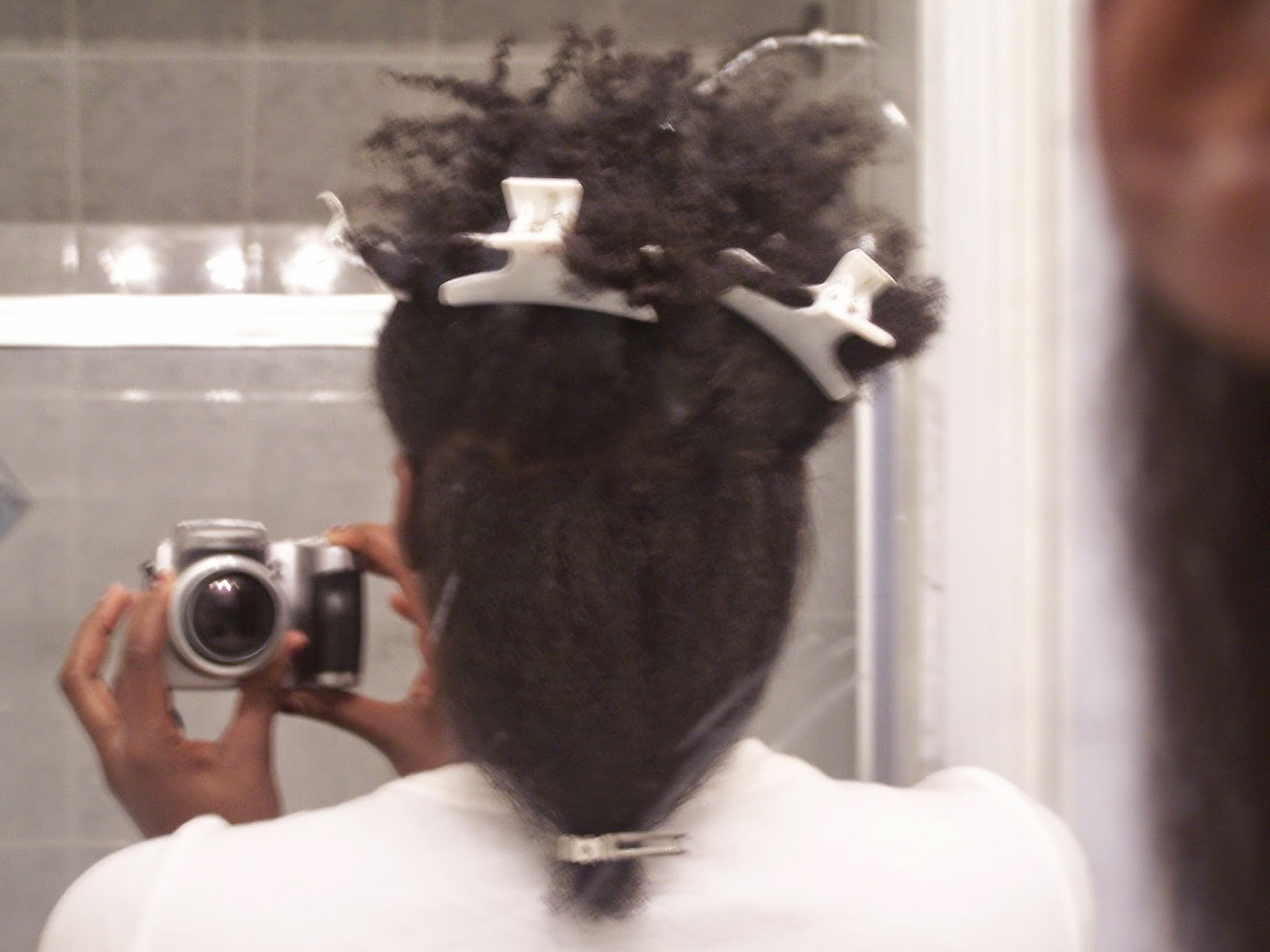
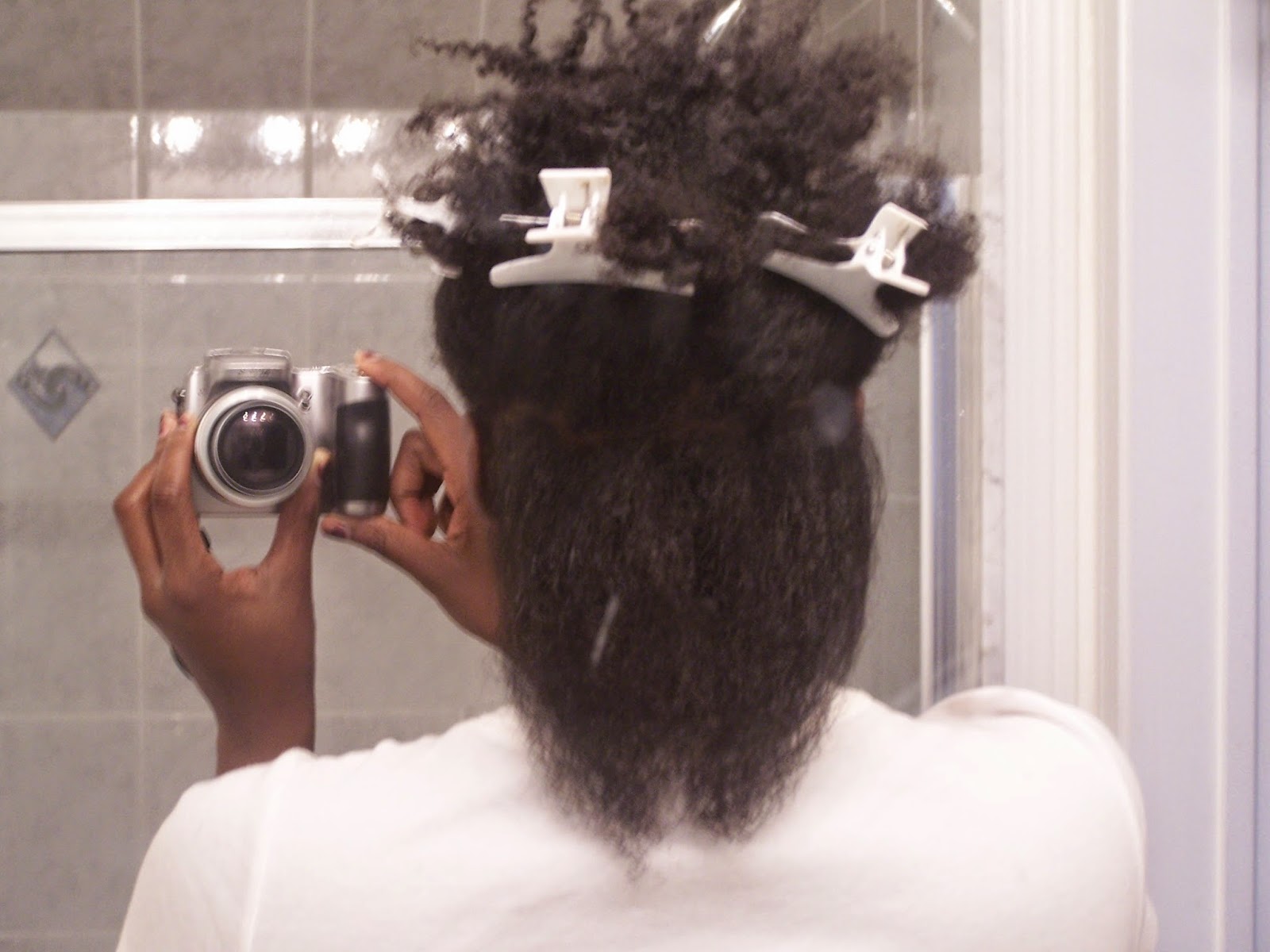
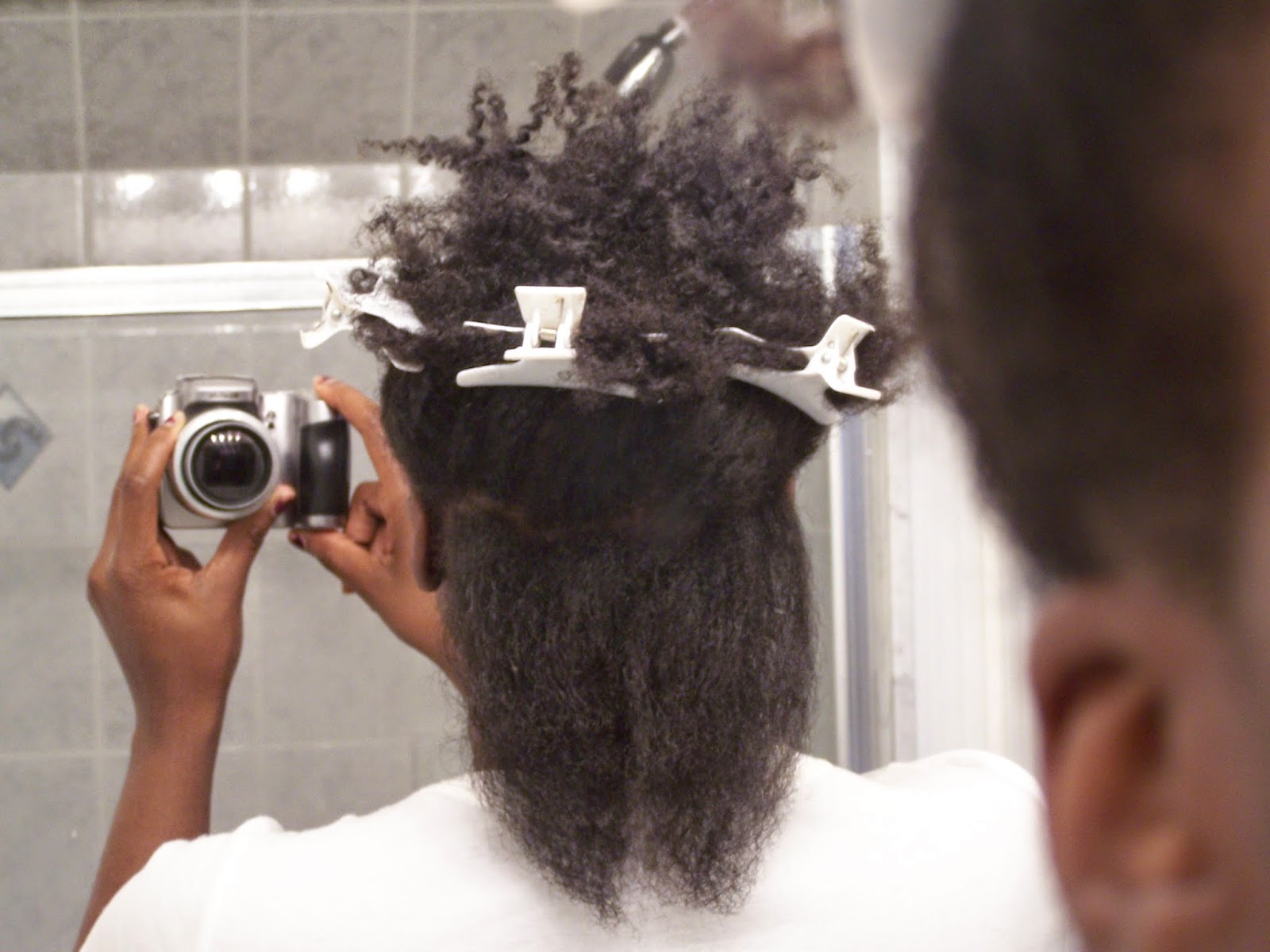
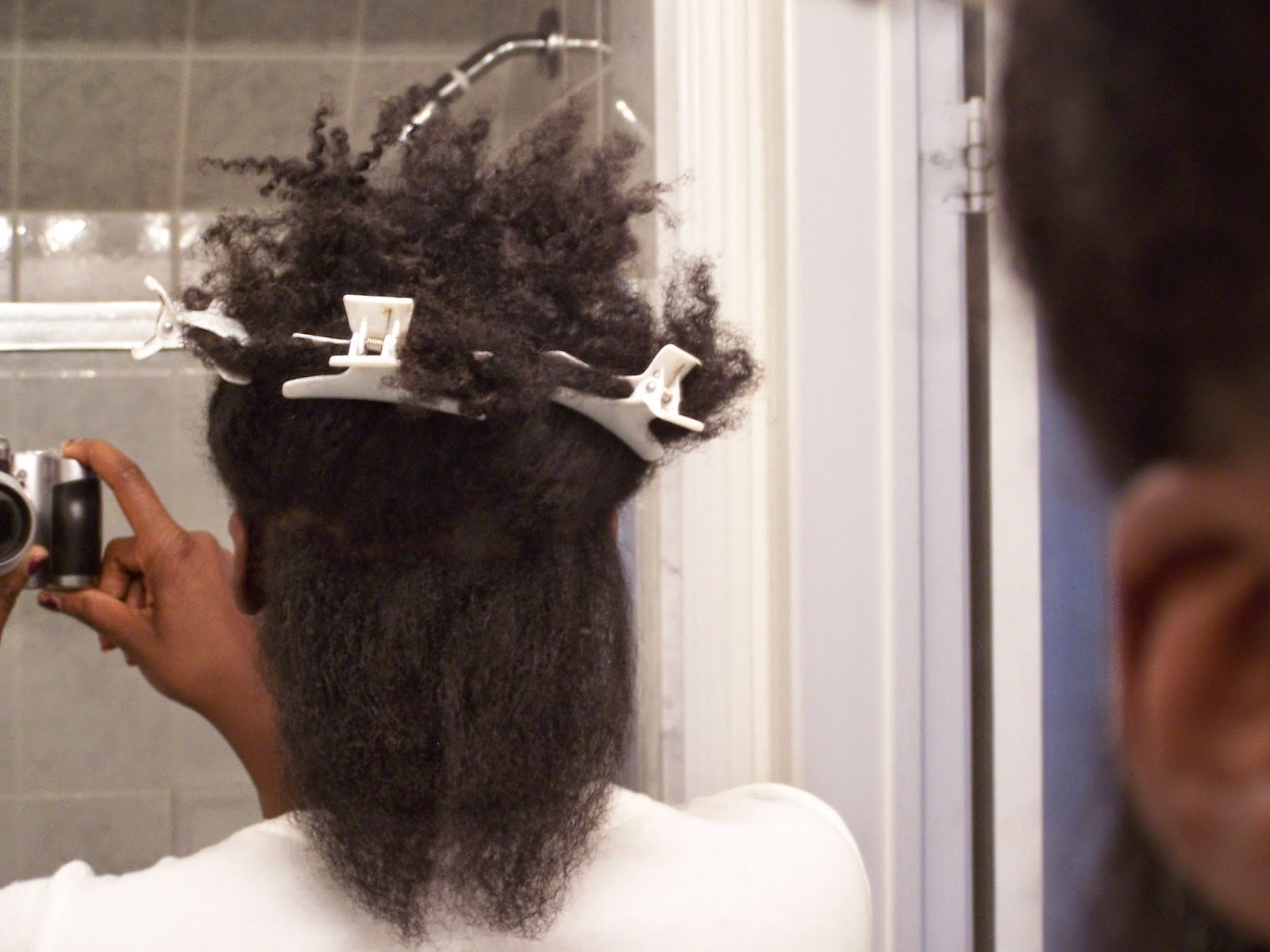
Well it's been a while since I "chopped" my hair and began to work through the damage ends that I had. To clarify, I did not cut my hair, only trimmed a few inches every few weeks as it continued to grow out. I was already 100% natural at this point, but had scaggly, broken off ends. I still do in some sections, but this is the state of my hair so far.


For the length check I simply twisted, then retwisted my hair and then used a hair straightener on a low setting to stretch it out a bit in the back, rather than press it out completely. I did not want to straighten my entire head because the goal was merely to check my length, as I will putting my hair in a protective style for the next two weeks (twist). It's getting cold and I am getting lazy and I do not want that to negatively impact my progress. In the process of stretching my hair two things became very apparent. First, the left side of my head is much thicker ( and a bit longer) than the right side. Not just on the back, but in the side and front as well. I am really puzzled by this discovery. I can understand the sides of my head being different length and thickness because I sleep on my right side. This tends to stunt hair growth a little bit. However, the back and the front *scratch head*? I don't get that at all. I will try rubbing some JBCO on that side to see what happens. I actually planned to do a 6 month JBCO challenge between Oct 12-Mar 28 (details to follow), so I need to figure out how to adjust that for this issue if I hope to see a difference. My hope is that it will help thicken up my hair some since I do not think it really works as a growth aid.

The second issue I notice with my hair is the fact that I have a "gap" around my nape. If you look closely, you can see it looks thin right in the middle. That is because the nape is spotty. I am not sure how to fix that, but I will do some research and see what I can do. Beyond that, I am pleased with my progress. I completed a hot oil treatment this weekend and my hair felt really good after I did my final rinse (e.g. shampoo, DC, etc). Changing my regimen has done wonders for my hair. It feels softer, looks shinier and I am experience less breakage and dryness. 
                                 

Saturday, October 11, 2014

Hits & Misses 2014

As a new year gets underway I am thinking about my future hair goals. I have had some success with products in the last year, but I need to keep it going if I hope to reach BSL by January 2016. Here are a few products (and techniques) that created magic as well as a few disasters for my hair over the last year (note: some of these products have moved around as the ingredients seem to have changed slightly and my hair appears to be changing)

Hits
Shea Moisture Raw Shea Butter Moisture Retention Shampoo (modified)
Shea Moisture Raw Shea Butter Restorative Conditioner (modified)
Aubrey Organics Honeysuckle Rose Conditioner (modified)
Aubrey Organics White Camellia Ultra-Smoothing Conditioner
Homemade Banana/Coconut Milk Mask
Weekly Herbal Hot Oil Hair Treatment
Herbal Scalp Oil Treatment
Detangling prior to shampooing
Adding oils and hydrolyzed protein to my conditioners 
Finger combing 
Sleeping with a satin scarf and satin pillowcase
Washing hair in twisted sections
Deep conditioning based on porosity levels
Protective styling for 99% of the time (to reach goals)

Misses
Applying and aloe vera juice as final rinse

Neither Hit nor Miss/Just There:
Argan Oil (+in conditioners - as a sealer)
Qhemet Biologics Amla and Olive Heavy Cream (modified)

What I learned about my hair and products in general over the last year:
  • Treating hair based on porosity level makes a huge difference 
    Well that's me and my journey thus far. Happy New Year to all my subbies...and may you achieve all your many hair goals in 2015!!!!!!


    Saturday, October 4, 2014

    Mini Hair Goals Revisited

    I was reviewing a few of my older post while I was cleaning up some of the bugs on the blog and I came across a post that I posted at the beginning of my journey (when I was relaxed) and that it helped me a lot when I was trying to get over that hump from jaw length to shoulder length. I am currently stuck at SL at the moment and I really want to move on already! 

    Anyway, the process requires me to sit down and really organize my thoughts Smileys. What am I trying to achieve? What are some of the issues I have with my hair right now? Basically, what I was trying to do was come up with some mini goals, so that in time I would be able to achieve my overall goal of beautiful healthy hair. 

    This is what I came up with:
    1. Increase moisture 
    2. Retain length
    3. Reduce single strain knots and breakage
    4. Improve and maintain a healthy scalp condition
    When broken down in this way, it really isn't that hard. So how do I achieve success with each goal? What products or tools will I use?

    Increase Moisture
    1. Drink more H20  (minimum 2 litres/day) 
    2. Use a moisture balance shampoo, conditioner and deep conditioner at a pH of 5.0
    3. Spritz hair with a specialize mix for porosity level every other day 
    4. Apply a protein conditioner as needed (biweekly for high porosity; once a month for low porosity) to fill in gaps in hair shaft
    5. Apply herbal oil treatment once a month
    6. Use a moisturizer with a pH of 4.0 and seal with shea butter on high porosity areas 
    7. Use a hooded dryer to assist in deep conditioning
    Retain Length
    1. Finger detangling. My hair is just too tightly coiled to comb through, even with a wide tooth comb.
    2. Minimize manipulation by utilizing protective styles 100 of the time for longer periods of time (e.g. 2 weeks) for a period of 6 months.
    3. Tie hair with scarf and sleep on silk pillowcase
    Reduce Single Strain Knots and Breakage
    1. Minimize manipulation by utilizing protective styles 100% of the time for longer periods of time (e.g. 2 weeks) over a period of 6 months.
    2. Finger detangling.
    3. Allow for enough time to do hair routine to avoid rushing
    Improve and Maintain a Healthy Scalp Condition
    1. Apply herbal growth every other day
    2. Daily 1 min scalp massages

    I'll keep you posted on my hair progress.

    Happy Hair Growth!

    Hair Update

    Since I've made a few changes to my hair regimen based on my hair's porosity level, I have noticed a difference in my hair. It retains moisture a lot better, it feels softer, there is less breakage. 

    Some of the things I have done to adjust my products to help my hair along:

    Shampoo (5.5 pH):
    1.5 tbsp conditioning shampoo 
    1.5 tbsp water
    1/4 tsp lemon juice
    3 drops tea tree oil and 3 drops of lavender (for alleviate scalp ailments) 

    Conditioner (5.0 pH):
    per 2 tbsp conditioner
    1 tsp aloe vera juice
    1/4 tsp of EVCO, EVOO, Argan and Avocado oil
    (3/8-3/4 tsp hydrolyzed wheat protein if doing a protein conditioner)

    Leave in (4.5 pH):
    1 tbsp Knot Today
    1/2 tsp aloe vera juice
    1/2 tsp Jojoba oil
    1/2 tsp castor oil

    Styler (4.5-4.0 pH):
    1 tbsp Camilla Rose Jai Almond Twisting Butter 
    1 tsp aloe vera juice
    1/8 tsp lemon juice (to lower to 4.0 for high porosity areas)

    Spritz as needed (4.0 pH):
    high porosity
    1/3 cup water
    3 tbsp aloe vera juice
    2 tbsp veg glycerine

    low porosity
    1/2 cup + 1 tbsp water
    1 tbsp veg glycerine 

    These adjustments seem to be working for my hair so far. I notice my hair responds by clumping and curling really well. Little to no frizz and moisture that last for days and it feels very soft. I am also trying to stick with a set a product for a period of time to really give this new regimen a chance. So far so good because I notice if I deviate from this process even slightly I will get different results. I've also been able to learn which products do not work well. 


    Tuesday, September 9, 2014

    Low/High Porosity Woes

    A few days ago I posted information on hair porosity and how important it is to hair care and length retention. So what does this mean for your hair, especially if you are like me and have "spotty" or different porosity levels?

    Well, there is some confusion regarding the way in which hair responds to moisture, manual manipulation and heat. To begin, many believe the cuticles can be easily opened and closed by simply applying particular products or heat to the hair, however it does take a lot more effort than that. While it is true, certain harsh chemicals have the ability to lift the cuticles, the the key word here is "harsh". You must remember, when this occurs your cuticles are being forcibly raised because the hair is out of balance. This is not something you would want to do to your hair on a consistent basis (e.g. weekly) . More importantly, forcing your cuticles to open on a consistent basis is not something you can do without severely damaging the hair over time. In other words, you can not "fix" your hair's porosity.

    So what can you do? Although you can not "fix" the current state of your hair, you can minimize the damage that can happen because the cuticles are raised (high) or resistant (low) to absorbing moisture. Keep in mind, these practices are temporary and must be done on a regular basis and they only serve to help you retain the length you have as you grow in hair that is healthier and balanced (e.g. normal/medium porosity). This is why it is good to evaluate your hair every six months or and make adjustments as you continue on your hair journey. 

    Tips for Low Porosity

    1. Beware of and minimize your use of products that have a low pH or highly acidic (e.g. aloe vera juice, citric acid) because these substances work to keep the cuticles closed.
    2. Use light to medium water based moisturizers and minimize products that are loaded with heavy oils or butters as these will simply sit on top of the hair. 
    3. Use lighter oils (e.g. jojoba, argan or grape seed) to seal in the moisture you are using on the hair.
    4. Use steam to help add moisture to the hair. 
    5. Apply products to damp or slightly dry hair instead of wet hair.
    6. Focus more on increasing moisture levels, while minimizing protein as this type of hair often retains protein quite well.
    7. Stick to monthly protein treatments to avoid protein overload.

    Tips for High Porosity

    1. Use a moisturizing shampoo
    2. Use products with a low pH or highly acidic (e.g. aloe vera juice, citric acid) because these substances work to keep the tighten the opened cuticles (it will not "close" them).
    3. Use thicker butters and products with heavier oils as it will seal the cuticles and trap in the moisture you receive from the product.  
    4. Use of protein (hydrolyzed wheat or silk) conditioners regularly (weekly to biweekly) to help fill in gaps and holes that are present in the hair shaft.


    source
    source


    Sunday, September 7, 2014

    What the pH?!

    So now that I understand a little bit more about porosity and how important it is to hair growth, I have decided to make a few changes. Before I explain what those changes will be I wanted to highlight some information on pH balance, as porosity and pH balance go hand in hand. 

    Without getting too technical, it is very important to understand how pH aids in maintaining optimal hair balance as this affects hair growth (length retention), its appearance (shine vs dull, frizz vs sleek, curl definition) and how your hair responds to products/ingredients (styling results). 

    Healthy hair is naturally more acidic, falling between a pH of 4.0-5.5. Several environmental factors can negatively affect the pH balance of our hair, such as  chemicals, harsh shampoos, styling products and heat. When the hair is pH balanced, the cuticles remain slightly closed allowing it to remain strong and healthy and shiny. When the pH balance of the hair is too high the cuticles are raise and the cortex of the hair shaft is exposed, which can lead to tangles, frizz, knots making the hair more susceptible to damage and breakage. Similarly, when the scalp's pH is too high, you will experience various scalp disorders (e.g. dry, itchy, dandruff).

    One way to create and maintain a healthy pH balance is by using products that is close to the appropriate pH range to help maintain (or restore) the hair's ideal pH levels when it is too high. The cuticles on curly hair tends to remain open as the curl pattern make it difficult for the cuticles to lie flat. Therefore, the products we use is very crucial. Learning this information has been a tremendous help to me as I try to get my hair back on track because similar to porosity, it has helped me understand why my hair is reacting to certain products in a negative way. 

    Armed with my pH testing strips, I tested all of the products I currently use. I recommend that you do this as well since very few companies post the pH level of their products.Testing strips will come in handy for another reason as well, which I will explain below. I also included the ideal range for these products. 


    Shampoo (6.0-5.0):
    Shea Moisture Organic Raw Shea Butter Moisture Retention Shampoo 7.0
    Shea Moisture Coconut & Hibiscus Curl and Shine Shampoo 7.0


    Conditioner (5.0-4.0):
    Aubrey Organics Honeysuckle Rose Conditioner 6.5
    Shea Moisture Organic Raw Shea Butter Restorative Conditioner 5.5
    Cantu Shea Butter Mask 5.0
    Aubrey Organics White Camellia Ultra-Smoothing Conditioner 4.0


    Leave In Conditioner (4.5-4.0):
    Knot Today Detangler 7.0
    Shea Moisture Organic Coconut & Hibiscus Hold & Shine Moisture Mist pH 6.5
    Giovanni Direct Leave-in pH 6.0


    Moisturizer (4.5-4.0):
    Shea Moisture Organic Coconut & Hibiscus Curl and Style Milk pH 7.0
    Qhemet Biologics Amla & Olive Heavy Cream 7.0
    Qhemet Biologics Burdock Root Butter Cream 6.5
    Shea Moisture Yucca & Baobab Volumizing Hair Milk 6.5
    Oyin Handmade Honey Dew Lightweight Quenching Lotion pH 5.0


    Stylers (4.5-4.0):
    Komaza Care Califia Styling Pudding 7.0
    Komaza Care Coconut Hair Pudding 7.0
    Camilla Rose Naturals Almond Jai Twisting Butter 7.0
    Entwine Coutour Jellé Styler 6.5
    Lily of the Desert Aloe Vera Gelly 6.0
    Eco Styler Gel (Olive Oil) 6.0
    KCCC 4.5

    As you can see a lot of the products I use do not fall within the appropriate pH range. Pair this information with the issues associated to high and low  porosity I can understand why I have been struggling with frizzy, brittle, dry hair for so long.  

    So what does this mean for my hair? Well, I don't think it would be practical to run out and buy a slew of new products, but I do need to find a solution to address the issues I am having with my hair if I hope to retain my lengths. One solution would be to "create" pH balanced products that will work best on my hair. This best way to accomplish this is to simply add ingredients that test higher in acidity to my hair products in an effort to lower its alkalinity. This would include ingredients like:
    Aloe Vera Juice 4.0
    Vinegar 2.5
    Lemon Juice 2.0
    ACV 3.5

    This is where those additional testing strips I discussed above will be helpful. Once you've added one of these ingredients to your products, retest it to make sure it falls within the appropriate range. For example, I add some distilled water and 1/4 tsp of lemon juice to approximately 4 oz of shampoo lowering it from a 7.0 pH to 5.5 pH. I've noticed a difference in how my hair feels after shampooing when I've done this over a period of time. 

    If you are going to add anything to your products to lower its pH level, it is highly recommended that you separate a small amount of the product you would like to use and gradually add one of the ingredients listed above to ensure that you do not "spoil" the larger batch. 

    I hope this helps you out as much as it has helped me.

    HHG!

    Sunday, August 31, 2014

    Hair Porosity...What's the Big Deal?

    Porosity seems to be on (almost) everybody's lips. Why? How does porosity effect the quality of our hair? Well, porosity refers to how well your hair absorbs and retain moisture. It is determined by the cuticle layers, which allows moisture to pass in and out of the hair. If the cuticles are tightly closed (also known as low porosity) it will be difficult to get moisture into the hair. If the cuticles are raised (also known as high porosity) then it will be easy to get moisture into the hair, however you will have difficulty retaining that moisture.In both situations, the lack of moisture will result is dry hair, which has an increase chance of breakage. Normal porosity is the optimum hair state we want to achieve (or maintain) because it allows moisture to enter the hair shaft, while preventing too much moisture from escaping. The result, is healthy, shiny hair that thrives and behave in a predictable way (e.g. maintains hair style, easy to manage and manipulate). 

    Porosity levels may be determined by genetic factors, but it can, and is often affected by external factors such like the environment, heat treatment, chemical use and how you handle your hair. Understanding and identifying your hair's porosity is important because it will ensure you are using the right products to address your current hair condition and meet your hair goals. 

    I emphasize "current" because hair porosity can change over time. A person can also have different porosity levels throughout their hair. I for one have both low and high porosity hair. After doing some research, this was how I figured it out:

    How to Determine Your Hair Porosity 

    Does it Float?
    One way to determine your hair's porosity is the water method. The water method or the "float test" examines how the hair behaves in room temperature water. Take a few strains of hair from different sections of your head (e.g. back, left side, right side, crown and front). Place it on top of a glass of water and wait 1-2 minutes to see how it responds. Do not push or manipulate the hair while it sits on the water. If it floats, your hair has low porosity. If it sinks to the bottom of the glass then your hair is highly porous. 

    There is some debate as to whether or not one can truly test hair porosity this way because of the hair's structure. For this reason, there are a few other ways you can use to help figure how how porous your hair is. 

    How Fast Does It Dry?
    After washing and conditioning your hair as you normally would, allow your hair to air dry without blotting it dry or adding any additional products. Do not dry off your body for this test. If you hair dries faster than your body does, your hair is highly porous. 

    Is It Smooth?
    Another way to test your hair is to take a few strains of hair and gently slide your hair up the shaft from the tip to the root. If you feel any resistance or it feels rough, your cuticles are not flat and therefore porous. While this test alone is not definitive, pair it with the other two test you did to help determine your hair's porosity.

    It's best to use all three test to help determine where your hair falls. So, 

    Low Porosity: hair floats, dries after your body, stains feels smooth to the touch.

    Normal Porosity: only one of the three tests indicated you had high porosity.

    High Porosity:  two or all three of the tests indicated you have high porosity


    The above test is not an exact science. These test are only used to help gear you in the right directions to help you care for your hair more effectively. Unless you carry out very expensive lab base test, you will not be able to truly determine the porosity of their hair in a definitive way. However, what is clear is the fact that hair responds in very unique ways based on its porosity level. 

    You have no idea how helpful this has been because I can now make better decisions when I treat and style my hair. Things made a lot more sense once I figured out what was going on with my hair and why certain DC treatments worked for a while then completely ruined my hair. For example, I have both low and high porosity level. Low porosity does not respond well to too much protein, while high porosity hair requires it to minimize breakage due to gaps and holes in the hair shaft. In the past I thought I was protein sensitive because sections of my hair would break easily and I was looking at my hair as a whole. As a result, I would only do mild protein treatments once a month. The problem is, the parts of my hair (side, front and crown) would suffer because it needed protein much more than that. I couldn't figure it out and got so frustrated because I wouldn't see any real progress in these areas (past posts will confirm this). The back of my hair, which loved the lack of protein and needed increase moisture thrived and still thrives.

    With this new knowledge I have made adjustments to my regimen and I've noticed a difference in the feel and look of my hair. I just wish I knew this information before. 

    So what does this mean for my hair? Stay tuned....

    source
    source
    source 

    Monday, February 17, 2014

    Shea Moisture....Where Have You Been All My Life?

    From the title of the post, I am sure you've already guessed that this will be another review of Shea Moisture products. Two of these products are new to the line up and a part of the Moisture Retention line, which I've wanted to try for a while now because I have heard good things about them. In all honesty I did not need a new conditioner because I was fairly happy with my current conditioners. I've noticed however, that a few of my favs have new ingredients, which puzzles me. I mean as the old saying goes, if it ain't broke, why fix it? I am not quite sure if that is why my hair has not been responding to some of my staples the same way. Hair does change over time, so that may also be contributing to the issue I have noticed. Anyway, I thought I would give the following items a try in an effort to meet my hair needs. 

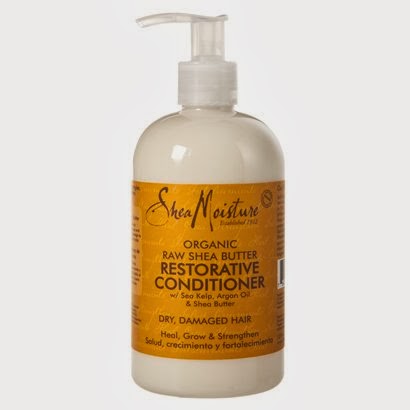
    Shea Moisture Organic Raw Shea Butter Restorative Conditioner ($9.99 US, $12.99-$20 CDN)

    Promise: Our all‐natural, daily conditioner moisturizes and repairs dry, lifeless, over‐processed and damaged hair.
    Ingredients: Deionized Water, Butyrospermum Parkii (Shea Butter)*, Argan Oil, Coconut Oil*, Behentrimonium Chloride, Essential Oil Blend, Vegetable Glycerin, Emulsifying Wax, Sea Kelp Extract, Panthenol (Vitamin B‐5), Avocado Oil, Lonicera Caprifolium (Honeysuckle) Flower (and) Lonicera Japonica (Japanese Honeysuckle) Flower extract, Tocopherol (Vitamin E), Daucus Carota Sativa (Carrot) Seed Oil. *Denotes Certified Organic Ingredient.

    Results: Let me just say, that this conditioner right here, is the business! When I put it on my hair my knots just melted away (and I get a lot of knots). My fingers were able to glide threw it and I loved that. I will need to stock up the next time I am in the States. I used the conditioner for 5 weeks in a few different ways (e.g. pre-poo, detangler, conditioner post-poo) and it worked out lovely any way I used it. My hair was detangled, moisturized and VERY SOFT. Overall, I will give this product a Smiley. It's a keeper.


    Shea Moisture Organic Raw Shea Butter Reconstructive Elixer ($9.99 US, $13.99 CDN)

    Promise: This intensely moisturizing and penetrating all-natural oil treatment repairs and strengthens hair. Strengthens strands from the roots, protects against damage and leaves hair silky and vibrant. Trace minerals detoxify hair follicles of impurities and residue. Argan oil restores shine and rebuilds hair elasticity. Shea butter deeply moisturizes and repairs damage to hair and scalp.

    Ingredients: Butyrospermum Parkii (Shea Butter) Oil*, Argan Oil, Vegetable Squalene, Carrot Oil, Macadamia Nut Oil, Isopropyl Myristate, Avocado Oil, Castor Oil, Sebacic Acid, Sea Kelp Extract, Essential Oil Blend, Lonicera Caprifolium (Honeysuckle) Flower (and) Lonicera Japonica (Japanese Honeysuckle) Flower Extract, Tocopherol (Vitamin E). *Denotes Certified Organic Ingredient.

    Results: Well, I'm not sure what to say about his product. Did it leave a shine on my hair? Yes. Moisturizing? No, it was actually a little drying and the oil seem to just sit on top of my hair, which I didn't like. I used it on top of my twist while damp and on dry hair.  It didn't work either way. For these reasons I have to give it a Smiley.I haven't tried it more than a few times, so my assessment could change, but I really doubt it.

    Smiley - Smiley = not worth the money, don't waste your time.

    Smiley - Smiley = neither hit or miss; just okay

    Smiley - Smiley = good product; really worth trying.

    Smiley = amazing product!


    Wednesday, February 5, 2014

    Hits and Misses for 2013

    As a new year gets underway I am thinking about my future hair goals since my second big chop *sigh*. I have had some success with products in the last year, but I need to keep it going if I hope to reach BSL by January 2016. Here are a few products (and techniques) that created magic as well as a few disasters for my hair over the last year (note: some of these products have moved around as the ingredients seem to have changed slightly and my hair appears to be changing)

    Hits
    Shea Moisture Raw Shea Butter Moisture Retention Shampoo
    Aubrey Organics Honeysuckle Rose Conditioner
    Aubrey Organics White Camellia Ultra-Smoothing Conditioner
    Giovanni Direct Leave in  
    Avocado Oil
    Jamaican Black Castor Oil
    Olive Oil
    Jojoba Oil
    Virgin Coconut Oil
    EOs
    ACV Herbal Rinse
    Detangling prior to shampooing
    Adding oils to my conditioners 
    Finger combing 
    Sleeping with a satin scarf and satin pillowcase
    Overnight deep conditioning treatments
    Washing hair in twisted sections
    Mild protein treatments once every 3 weeks
    Avocado Butter blend as a sealant

    Misses
    Shea Moisture Coconut and Hibiscus Curl and Shine Shampoo

    Neither Hit nor Miss/Just There:
    Homemade Avocado Protein Mask  (after a small adjustment it was much better)
    Oyin Lightweight Lotion

    What I learned about my hair and products in general over the last year:
    • Finger combing allows me to retain a lot more hair because my hair is tightly coiled and combs causes it to snap, even when wet. 
    Well that's me and my journey thus far. Happy New Year to all my subbies...and may you achieve all your many hair goals in 2014!!!!!!


    Sunday, November 24, 2013

    The Benefit of Using Natural Products


    There are hundred if not thousand of websites that provide recipes for natural and organic hair care, beauty products and remedies including shampoo, conditioner and hair color, that you can make using essential oils and ingredients found in your own kitchen and garden! If you have read and are not utilizing some of the ideas found in my article on Getting Creative with Homemade Recipes   then you will find that creating your own homemade products are easier than you think. Below I've created a list of ingredients to try when creating your own unique products

    *Please use extreme caution when using any products for the first time, natural or not. If you are allergic to any of the listed ingredients then do not use it on your hair/scalp:

    Almond Oil - This carrier oil is both nourishing and protective. It is high in linoleic acids, which account for its anti-inflammatory, acne reduction and moisture retention properties. Almond oil is a commonly used ingredient in beauty products as it treats and prevents dry, chapped and irritated skin (scalp). In addition to skin, Almond oil is great for hair. It helps condition, nourish, and soften hair while stimulating hair growth!

    Aloe Vera - Aloe Vera improves the skin's ability to hydrate itself, aids in the removal of dead skin cells and encourages skin rejuvenation. Some have raved about its ability to encourage hair stimulation and hair growth! This product also has incredible moisturizing properties!

    Avocado/Avocado Oil - This oil is rich in potassium, sulfur, vitamins A,D and E and fatty acids. It is very nourishing for dry hair and scalp as it replenishes oils lost through washing and coats the cuticles. It is especially valuable for those with eczema, dry scalp and other scalp ailments. It leaves the hair feeling smooth and soft.

    Banana- The pulp is a great biodegradable moisturizer and lubricant, excellent for dry hair. It is an excellent humecant, locking in moisture and coating the hair shaft, leaving the hair smooth. The pulp is rich in potassium and vitamin A, B, C.

    Calendula Oil - Moisturizes and conditions. Very good in soothing scalp and skin conditions like eczema. 

    Carrot Seed Oil - This oil is a true powerhouse in the hair growth category! Carrot Seed oil is rich in Vitamins A, B, C, D and E. As you know Vitamin A, B and E are excellent for hair growth as it improve moisture for increased elasticity, conditions hair and stimulates growth.

    Chamomille (Roman) Oil - This essential oil has anti-inflammatory properties and is very calming to the skin. It is both emollient and healing and thus is a wonderful addition to any skin care product!

    Clary Sage - Astringent, stimulates  growth, kills bacteria. It is also believed to darken gray hair. 

    Coconut Oil - Coconut oil is an amazing carrier oil! This is a great oil for general moisturizing and serves as a protective layer, helping to retain the moisture in your hair. Coconut oil does not clog pores (which can inhibit hair growth--and even kill hair follicles), making it great for the hair. It stimulates hair growth, softens the hair and conditions the scalp. It also can also help eliminate dandruff!

    Evening Primrose Oil - Moisturizes and conditions the hair.

    Glycerine - Natural emollient, pulls moisture into the hair.

    Henna (Lawsonia Inermis) - Henna is believed to help provide stronger, smoother and shinier hair when used regularly. The dye is believed to penetrates the hair shaft, binding with the keratin in the hair while coating the hair, filling in rough spots on a frayed cuticle. This adds a second layer of strength and makes hair stronger. With its ability to smooth over rough cuticles, damage during combing and manipulation is reduced a great deal.

    Honey - is a natural wonder full of properties beneficial to the hair. It is a natural humectants - meaning it attracts moisture and holds it in.

    Jojoba Oil - The structure of Jojoba oil closely resembles that of your own skin oil (sebum). Jojoba is readily absorbed into the skin, is non-pore clogging and helps balance production of your natural sebum. Jojoba is moisturizing and helps prevent dry scalp. It contains linoleic acid and myristic acid, which account for its anti-inflammatory and moisture retention properties. It adds moisture and gives your hair extra protection, shine and body. It also cleanses and is revitalizing to hair and scalp!

    Lavender Oil - This essential oil has multiple properties that make it important for overall general health and well-being. In hair care, Lavender is used as a scalp treatment for itchiness, dandruff, and even lice!

    Lemon Oil - Besides having a refreshing and clean aroma, Lemon oil helps balance cell fluids and sebum and increases circulation. In hair care, Lemon oil helps control oily hair and gives golden highlights. It is also helpful in controlling lice.

    Neem Oil - Neem oil has amazing healing properties and has long been used in Indian and Ayurvedic medicine. It moisturizes and protects skin. Its anti-inflammatory and pain relieving activity make Neem potentially useful against eczema on the scalp.

    Olive Oil - Olive oil has been used for generations in natural soap products. It attracts external moisture to the skin yet allows the skin to "cleanse" and release sweat, sebum and shed dead skin. Olive oil is high in the antioxidants Vitamins A and E providing anti-aging properties and it has disinfectant properties, is moisturizing, soothing and healing. Simply a wonderful and gentle component in skin care!This oil stimulates cell regeneration, increases elasticity and decreases wrinkles. Pomegranate oil is a savior for mature, irritated, and dry, cracked skin!

    Rosemary Oil - This is a well-known remedy for improving hair growth.It stimulates growth and has antiseptic properties. Rosemary also increases the circulation to the scalp therefore promoting hair growth and imparting shine to dark hair. Additionally, it helps control oily hair as well as dandruff.

    Shea Nut Oil - This oil glides on the hair and scalp smoothly and helps heal and repair dry, damaged hair. It also creates a protective moisture barrier against the dry, harsh elements! (see shea butter for more information on properties).

    Sweet Almond Oil - Contains Vitamin E and F, great properties for itchy scalp. It is mild and easily absorbed.

    Tea Tree Oil - Tea Tree Oil has so many beneficial properties that it is a must for all medicine cabinets! This oil soothes irritated, inflamed skin and stimulates healing while minimizes scarring. It is a natural antiseptic, antifungal and anti-microbial and treats dandruff.

    Vitamin E (Alpha Tocopherol) - As an anti-oxidant, Vitamin E prevents free radical damage from the sun and environment (yes your hair need UV protection too!). It improves moisture and helps soften the hair. Vitamin E also helps maintain the integrity (preventing rancidity) of product formulations.

    Play around with different products. Remember what works for one person may not work for you. Have fun!